In today’s fast-paced digital economy, businesses are increasingly leveraging AI in order management to streamline operations, enhance accuracy, and improve customer satisfaction. AI-driven automation and predictive analytics are transforming traditional order management systems, making them more efficient, data-driven, and resilient.
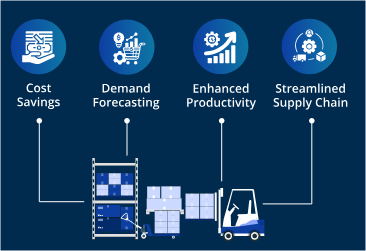
From predictive inventory management and automated order processing to fraud detection and personalized customer experiences, AI is revolutionizing the entire order management lifecycle. This article explores key use cases of AI in order management, highlighting how companies can optimize supply chains, reduce costs, and improve order accuracy.
1. Predictive Inventory Management
One of the most significant AI use cases in order management is predictive inventory management. AI-powered algorithms analyze historical sales data, seasonal trends, and market demand to forecast inventory requirements.
Benefits:
- Prevents stockouts and overstocking.
- Reduces inventory holding costs.
- Improves supply chain efficiency.
Example:
Retail giants like Walmart and Amazon leverage AI-driven inventory tracking systems to ensure that products remain available without overstocking, thus optimizing warehouse storage.
2. Automated Order Processing
AI enables automated order management systems that handle customer orders with minimal human intervention. Natural language processing (NLP) and robotic process automation (RPA) facilitate seamless order entry, confirmation, and fulfillment.
Benefits:
- Reduces manual errors.
- Speeds up order fulfillment.
- Enhances operational efficiency.
Example:
E-commerce platforms such as Shopify and Magento use AI-powered order management solutions to automate order tracking, processing, and fulfillment.
3. AI-Powered Fraud Detection
Fraudulent transactions are a major challenge in online order processing. AI-based fraud detection systems analyze behavioral patterns, payment history, and risk indicators to flag suspicious transactions in real-time.
Benefits:
- Prevents chargebacks and financial losses.
- Enhances transaction security.
- Identifies fraudulent patterns before they impact the business.
Example:
PayPal and Stripe leverage AI-driven fraud detection to analyze transactions, detect anomalies, and block suspicious activities instantly.
4. Smart Order Routing and Delivery Optimization
AI helps businesses optimize delivery routes and select the best fulfillment centers based on factors such as proximity, inventory levels, and shipping costs.
Benefits:
- Reduces shipping time and costs.
- Enhances customer satisfaction with faster deliveries.
- Optimizes logistics and supply chain management.
Example:
FedEx and UPS use AI-powered logistics systems to optimize package delivery routes, reduce fuel costs, and improve last-mile delivery efficiency.
5. AI-Driven Customer Support Chatbots
AI-powered chatbots provide real-time assistance for order inquiries, tracking, and issue resolution. These bots understand customer queries using NLP and provide accurate responses.
Benefits:
- Improves customer experience.
- Reduces support costs.
- Provides 24/7 customer assistance.
Example:
Amazon and eBay use AI chatbots to handle order-related queries, provide tracking updates, and assist with returns/refunds.
6. Personalized Order Recommendations
AI analyzes customer purchase history, preferences, and browsing behavior to offer personalized product recommendations that drive additional sales.
Benefits:
- Enhances customer engagement.
- Boosts revenue through cross-selling and upselling.
- Improves marketing efficiency.
Example:
Amazon’s recommendation engine suggests products based on past purchases, increasing sales and customer retention.
7. Intelligent Demand Forecasting
AI-driven demand forecasting models help businesses predict future sales trends and optimize inventory allocation accordingly.
Benefits:
- Reduces wastage and surplus inventory.
- Improves supply chain efficiency.
- Enhances order fulfillment accuracy.
Example:
Nike and Zara use AI to predict demand fluctuations, ensuring that the right products are available at the right time.
8. Automated Supplier Management
AI-powered supplier management solutions help businesses evaluate supplier performance, manage procurement, and ensure timely deliveries.
Benefits:
- Reduces supplier-related risks.
- Enhances procurement efficiency.
- Improves supplier relationship management.
Example:
Manufacturing companies use AI-based procurement tools to analyze supplier reliability and optimize procurement strategies.
9. AI-Enabled Warehouse Automation
AI-powered robots and automation systems enhance warehouse management by sorting, packing, and moving inventory efficiently.
Benefits:
- Speeds up warehouse operations.
- Reduces manual labor costs.
- Minimizes errors in order fulfillment.
Example:
Amazon’s fulfillment centers use AI-powered robots to automate inventory management and reduce order processing time.
10. Dynamic Pricing and Order Prioritization
AI-driven dynamic pricing models adjust product prices based on demand, competitor pricing, and customer behavior. Additionally, AI prioritizes high-value orders for faster processing.
Benefits:
- Maximizes revenue and profit margins.
- Adjusts pricing strategies in real-time.
- Prioritizes high-value customers for better service.
Example:
Uber’s AI-based pricing algorithm dynamically adjusts ride fares based on real-time demand and supply conditions.
Future Trends in AI-Powered Order Management
As AI continues to evolve, new trends are emerging in order management systems:
- AI-Powered Voice Commerce – Customers can place and track orders using voice assistants like Amazon Alexa and Google Assistant.
- Blockchain Integration – Ensures transparency and security in order processing.
- Hyper-Automation – AI combined with RPA and IoT will create fully automated order fulfillment systems.
- AI-Powered Sustainability – Businesses will use AI to optimize eco-friendly packaging, waste reduction, and green logistics.
Conclusion
AI is transforming order management by enhancing efficiency, reducing costs, and improving customer satisfaction. From predictive inventory management and fraud detection to personalized recommendations and automated customer support, AI’s applications in order management are vast and rapidly expanding.
Businesses that integrate AI-driven order management solutions will gain a competitive advantage in today’s dynamic market. As AI technology advances, its role in intelligent order fulfillment, logistics optimization, and supply chain automation will continue to grow, reshaping the future of e-commerce and logistics.
 TechAI
Leave a comment