The field of artificial intelligence (AI) and machine learning (ML) has witnessed significant advancements in recent years, with the development of complex models that can generate high-quality data, images, and other forms of content. One such innovation is the diffusion model, a class of generative models that has gained popularity due to its effectiveness in producing realistic data. This article delves into the concept of diffusion models, exploring their underlying principles, applications, advantages, and potential future developments.
Introduction to Diffusion Models
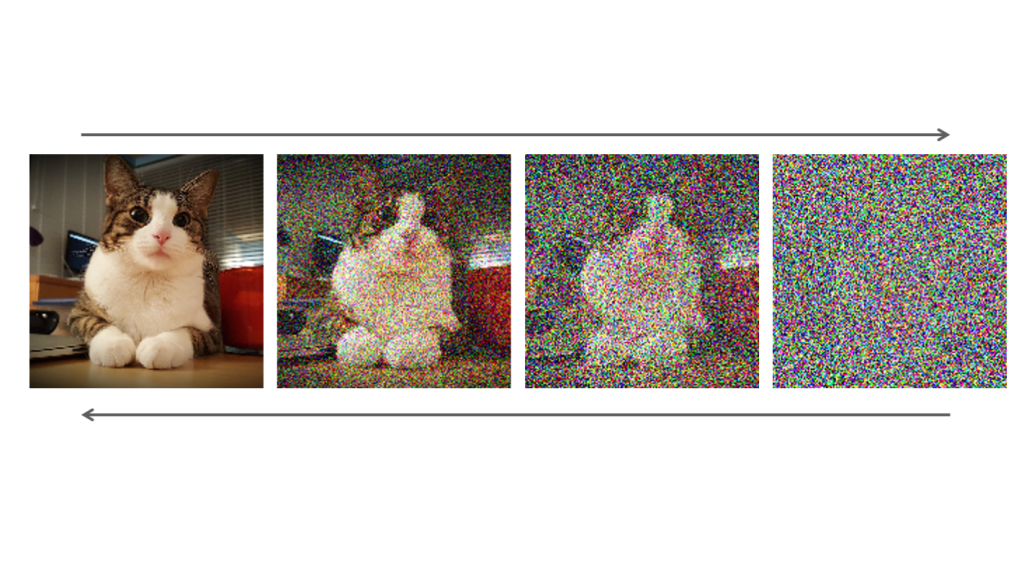
Diffusion models are a class of probabilistic generative models designed to generate data by reversing a diffusion process. Unlike traditional generative models, such as Generative Adversarial Networks (GANs) or Variational Autoencoders (VAEs), diffusion models operate by gradually transforming noise into structured data through a series of iterative steps. These models have shown remarkable success in generating high-fidelity images, sound, and even text.
What is a Diffusion Model?
At its core, a diffusion model is a type of generative model that simulates the process of diffusing or spreading noise through a system until it reaches a state of equilibrium. The model then reverses this process, starting from a noisy state and gradually refining the data until it matches the desired distribution. This approach allows diffusion models to generate complex and realistic data by learning the underlying structure of the data distribution.
Key Concepts in Diffusion Models
- Forward Diffusion Process: This process involves adding noise to the data in small, incremental steps until the data is completely randomized. The goal is to create a series of intermediate steps that the model can learn to reverse.
- Reverse Diffusion Process: The reverse diffusion process begins with the noisy data and gradually removes the noise through a series of iterative steps. The model learns to reconstruct the original data by reversing the forward diffusion process.
- Stochastic Differential Equations (SDEs): Diffusion models often utilize SDEs to model the diffusion process mathematically. These equations describe how the noise is added and removed in each step, allowing the model to learn the transition dynamics.
How Diffusion Models Work
Diffusion models work by iteratively refining data through a series of probabilistic steps. Here’s a breakdown of the process:
1. Forward Process: Adding Noise
In the forward process, noise is added to the data in small increments. This is done over several time steps, resulting in a series of intermediate noisy states. The amount of noise added at each step is carefully controlled, ensuring that the process is gradual and reversible.
- Mathematical Formulation: The forward process is often modeled using a sequence of SDEs, where the data is perturbed by Gaussian noise. The resulting noisy data is then used to train the model to learn the reverse process.
2. Reverse Process: Removing Noise
The reverse process is where the magic happens. Starting from the noisy data generated in the forward process, the model iteratively removes the noise to reconstruct the original data. This reverse process is also modeled using SDEs, with the model learning to predict the noise at each step and subtract it from the data.
- Training the Model: During training, the model learns to estimate the noise in the data at each time step. By minimizing the difference between the predicted and actual noise, the model becomes better at reconstructing the data in the reverse process.
3. Generation of Data
Once trained, diffusion models can generate new data by starting from a random noise vector and applying the learned reverse diffusion process. The result is high-quality, realistic data that matches the underlying distribution of the training data.
Applications of Diffusion Models
Diffusion models have a wide range of applications across various domains, owing to their ability to generate high-fidelity data. Some of the most notable applications include:
1. Image Generation
One of the most prominent applications of diffusion models is in the field of image generation. Diffusion models have been shown to produce images of unprecedented quality, often surpassing the results of GANs and other generative models. These models are capable of generating realistic images of objects, scenes, and even faces, making them valuable in creative industries, gaming, and virtual reality.
2. Audio Generation
Diffusion models have also been applied to audio generation, where they can synthesize realistic sound and music. By learning the distribution of audio data, diffusion models can generate high-quality soundscapes, speech, and musical compositions. This has potential applications in music production, sound design, and voice synthesis.
3. Text Generation
While less common, diffusion models can also be used for text generation. By learning the structure and semantics of language, these models can generate coherent and contextually relevant text. This could be useful in applications such as automated content creation, chatbots, and natural language processing.
4. Data Augmentation
Diffusion models can be used for data augmentation, where they generate additional training data for machine learning models. This is particularly useful in scenarios where labeled data is scarce or expensive to obtain. By generating synthetic data that matches the distribution of the real data, diffusion models can improve the performance of downstream machine learning tasks.
5. Anomaly Detection
In anomaly detection, diffusion models can be trained to learn the normal distribution of data. Any data point that significantly deviates from this distribution can be flagged as an anomaly. This approach is useful in applications such as fraud detection, network security, and predictive maintenance.
Advantages of Diffusion Models
Diffusion models offer several advantages over traditional generative models, making them a powerful tool in AI and machine learning:
1. High-Quality Data Generation
One of the key strengths of diffusion models is their ability to generate high-quality data. The iterative nature of the reverse diffusion process allows the model to refine the data gradually, resulting in more realistic and accurate outputs.
2. Stability and Training Efficiency
Unlike GANs, which are known for their instability during training, diffusion models are generally more stable. The training process involves minimizing a well-defined loss function, reducing the risk of mode collapse and other issues commonly associated with GANs.
3. Flexibility and Generalization
Diffusion models are highly flexible and can be applied to a wide range of data types, including images, audio, and text. They also have strong generalization capabilities, allowing them to generate diverse data samples that capture the full range of the underlying distribution.
4. Interpretability
The diffusion process provides a more interpretable framework for understanding how the model generates data. By examining the intermediate steps of the reverse process, researchers can gain insights into how the model learns and reconstructs the data.
Challenges and Limitations of Diffusion Models
Despite their advantages, diffusion models also face several challenges and limitations:
1. Computational Complexity
Diffusion models are computationally intensive, requiring a large number of iterative steps to generate data. This can result in longer training times and higher computational costs, making them less practical for certain applications.
2. Scalability
Scaling diffusion models to very large datasets or high-resolution outputs can be challenging due to the increased computational demands. Optimizing the efficiency of these models remains an active area of research.
3. Hyperparameter Tuning
Diffusion models require careful tuning of hyperparameters, such as the number of diffusion steps and the noise levels at each step. Finding the optimal settings can be a complex and time-consuming process.
4. Limited Adoption in Text Generation
While diffusion models have shown success in image and audio generation, their application to text generation is still relatively underexplored. The sequential nature of text data presents unique challenges that diffusion models must overcome to be effective in this domain.
Future Directions for Diffusion Models
The field of diffusion models is rapidly evolving, with ongoing research aimed at addressing their limitations and expanding their applications. Some potential future directions include:
1. Improving Efficiency
Researchers are exploring ways to reduce the computational complexity of diffusion models, such as by developing more efficient algorithms or reducing the number of diffusion steps required. This could make diffusion models more practical for large-scale applications.
2. Expanding Applications
As diffusion models continue to improve, they are likely to find new applications beyond image and audio generation. For example, researchers are exploring their use in areas such as molecular design, drug discovery, and climate modeling.
3. Integration with Other Models
Combining diffusion models with other generative models, such as GANs or VAEs, could leverage the strengths of each approach. Hybrid models could offer improved performance and stability, opening up new possibilities for generative AI.
4. Ethical Considerations
As diffusion models become more powerful, it is important to consider the ethical implications of their use. Ensuring that these models are used responsibly and that they do not perpetuate biases or generate harmful content will be a key challenge moving forward.
Conclusion
Diffusion models represent a significant advancement in the field of generative AI, offering a powerful and flexible approach to data generation. Their ability to produce high-quality data across various domains, from images to audio, makes them a valuable tool for researchers and practitioners alike. However, challenges such as computational complexity and scalability must be addressed to fully realize their potential.
As research in diffusion models continues to progress, we can expect to see new applications and innovations that push the boundaries of what is possible with AI. By understanding the principles and capabilities of diffusion models, we can harness their power to drive the next wave of AI advancements while ensuring that they are used ethically and responsibly.
 TechAI
Leave a comment