Artificial Intelligence (AI) has emerged as a disruptive force in the banking and finance industry, reshaping traditional practices and driving innovation across various domains. From enhancing customer experiences to optimizing operational efficiency and risk management, AI is revolutionizing how financial institutions operate.
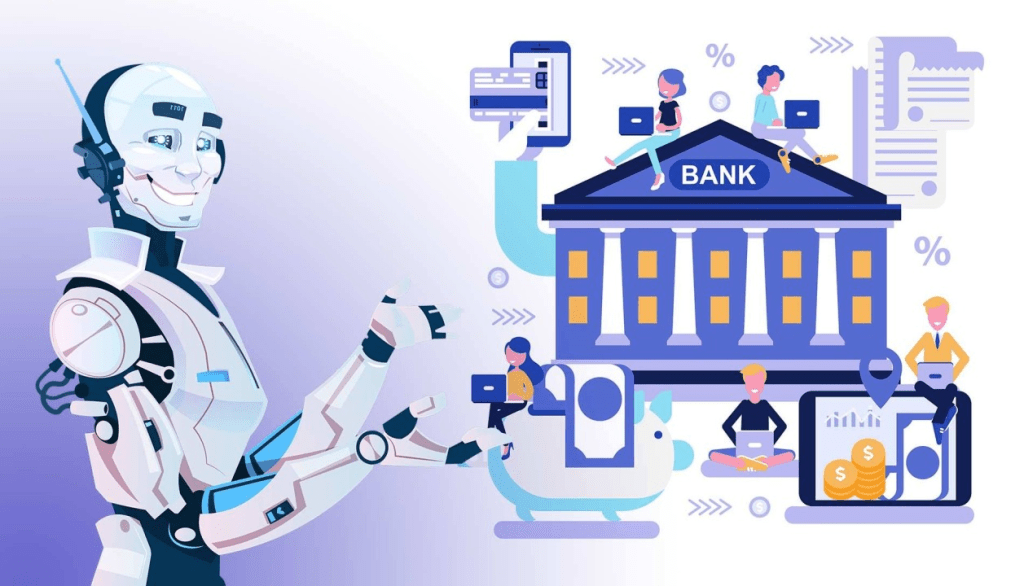
In this comprehensive guide, we explore the multifaceted impact of AI on the banking and finance sector, with a specific focus on its diverse AI use cases in banking operations.
Understanding AI in Banking: A Paradigm Shift
AI technologies encompass a wide range of applications, including machine learning, natural language processing, robotic process automation, and predictive analytics. In the banking sector, these technologies are leveraged to automate routine tasks, analyze vast datasets, detect patterns, and make data-driven decisions. As a result, AI is transforming the way banks interact with customers, manage risks, and drive business growth.
1. Enhanced Customer Experience
One of the primary areas where AI is making a significant impact in banking is in enhancing customer experiences. AI-powered chatbots and virtual assistants are deployed on bank websites and mobile apps to provide personalized assistance to customers, answer queries, and facilitate transactions. These virtual agents use natural language processing (NLP) algorithms to understand customer inquiries and provide relevant responses, improving overall service efficiency and customer satisfaction.
2. Fraud Detection and Prevention
AI plays a crucial role in fraud detection and prevention within the banking industry. Machine learning algorithms analyze transaction data in real-time to identify unusual patterns and detect potential fraudulent activity. These AI-driven systems can detect anomalies, such as unusual spending patterns or unauthorized transactions, and alert banks to take appropriate action. By leveraging AI technologies, banks can effectively mitigate fraud risks and protect both customers and financial institutions from financial losses.
3. Risk Management and Compliance
AI technologies are also instrumental in risk management and compliance functions within the banking sector. Machine learning algorithms analyze large volumes of data to assess credit risk, evaluate loan applications, and determine the likelihood of default. Additionally, AI-powered systems help banks comply with regulatory requirements by automating compliance checks, monitoring transactions for suspicious activity, and generating regulatory reports. By streamlining risk management and compliance processes, AI enables banks to operate more efficiently and effectively while reducing operational costs and regulatory risks.
AI Use Cases in Banking Operations
1. Predictive Analytics for Customer Insights
AI-powered predictive analytics tools analyze customer data to generate actionable insights and predictions. By analyzing historical transaction data, customer demographics, and behavior patterns, banks can identify trends, anticipate customer needs, and tailor their products and services accordingly. Predictive analytics also helps banks identify high-value customers, anticipate churn, and personalize marketing campaigns to improve customer engagement and retention.
2. Automated Loan Underwriting and Credit Scoring
AI technologies automate the loan underwriting and credit scoring process, enabling banks to make faster and more accurate lending decisions. Machine learning algorithms analyze various data sources, including credit history, income levels, and spending behaviors, to assess creditworthiness and determine the risk associated with loan applications. By automating the underwriting process, banks can streamline loan approvals, reduce manual errors, and improve the overall efficiency of lending operations.
3. Algorithmic Trading and Portfolio Management
AI-powered algorithmic trading systems execute trades and manage investment portfolios based on predefined rules and algorithms. These systems analyze market data, news sentiment, and historical trading patterns to identify profitable trading opportunities and optimize investment strategies. Algorithmic trading enables banks and investment firms to achieve higher trading volumes, reduce transaction costs, and generate better returns for investors.
The Future of AI in Banking: Opportunities and Challenges
As AI continues to evolve and mature, its impact on the banking and finance industry is expected to grow exponentially. However, along with its promises come challenges, such as data privacy concerns, ethical considerations, and regulatory compliance. Nevertheless, the potential benefits of AI in banking far outweigh the challenges, and financial institutions that embrace AI technologies stand to gain a competitive edge in an increasingly digital and data-driven world.
In conclusion, AI is reshaping the banking and finance industry in profound ways, from enhancing customer experiences to optimizing operational efficiency and risk management. By leveraging AI technologies, banks can unlock new opportunities for growth, innovation, and value creation. As AI adoption accelerates, financial institutions must continue to invest in AI capabilities, talent, and infrastructure to stay ahead of the curve and remain competitive in the digital age.
 TechAI
Leave a comment