In recent years, Artificial Intelligence (AI) has revolutionized various industries, and one area where its impact has been particularly significant is loan underwriting. AI-powered systems are transforming traditional underwriting processes by automating tasks, analyzing vast amounts of data, and providing more accurate risk assessments. In this article, we explore real-world use cases of AI in loan underwriting, demonstrating how this technology is reshaping the lending landscape.
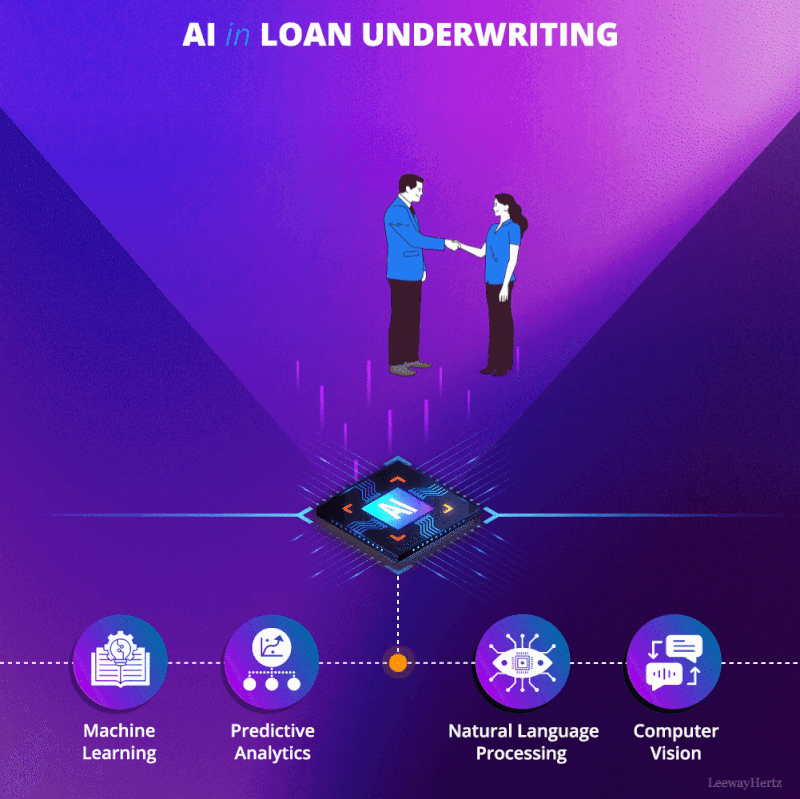
Introduction to AI in Loan Underwriting
AI has emerged as a powerful tool in loan underwriting, enabling lenders to make faster, more accurate lending decisions while minimizing risk. By leveraging advanced algorithms and machine learning techniques, AI systems can analyze borrower data, identify patterns and trends, and predict creditworthiness with unprecedented accuracy. Let’s delve into some real-world examples of how to apply AI in loan underwriting across various industries.
Real-World Use Cases
1. Credit Scoring and Risk Assessment
AI-powered credit scoring models are being used by lenders to assess the creditworthiness of borrowers more accurately. These models analyze a wide range of data points, including credit history, income, employment status, and debt-to-income ratio, to generate a credit score that reflects the borrower’s likelihood of default. By incorporating non-traditional data sources such as social media activity and utility payments, AI systems can provide a more comprehensive view of the borrower’s financial behavior and improve risk assessment.
2. Fraud Detection and Prevention
AI algorithms are also being deployed to detect and prevent fraudulent activities in loan applications. These algorithms analyze patterns and anomalies in borrower data to identify potential signs of fraud, such as identity theft or falsified financial information. By flagging suspicious applications for further review, AI systems help lenders mitigate the risk of fraud and protect their assets.
3. Automated Document Processing
AI-powered optical character recognition (OCR) technology is streamlining the document processing workflow in loan underwriting. These systems can scan and digitize loan documents such as bank statements, pay stubs, and tax returns, extracting relevant information with high accuracy. By automating this labor-intensive process, AI systems reduce the time and resources required to underwrite loans and improve operational efficiency.
4. Personalized Loan Recommendations
AI-driven recommendation engines are providing borrowers with personalized loan recommendations based on their financial profile and credit history. These systems analyze borrower data to identify suitable loan products and terms, taking into account factors such as interest rates, repayment schedules, and loan amounts. By tailoring loan offers to individual needs and preferences, AI systems improve customer satisfaction and increase loan approval rates.
5. Predictive Modeling for Default Prediction
AI-powered predictive modeling techniques are being used to forecast borrower behavior and predict loan defaults. These models analyze historical loan performance data, economic indicators, and borrower characteristics to identify patterns and trends that may indicate a higher risk of default. By incorporating machine learning algorithms, these systems continuously learn and adapt to changing market conditions, improving the accuracy of default prediction over time.
Benefits of AI in Loan Underwriting
1. Faster Decision-Making
AI streamlines the loan underwriting process, allowing lenders to make faster lending decisions. By automating manual tasks and analyzing data in real-time, AI systems reduce the time-to-decision for loan applications, enabling lenders to respond to borrowers more quickly.
2. Improved Accuracy
AI enhances the accuracy of risk assessment and credit scoring, leading to more informed lending decisions. By analyzing vast amounts of data and identifying relevant patterns and trends, AI systems provide lenders with more reliable insights into borrower creditworthiness, reducing the risk of default and loan losses.
3. Enhanced Efficiency
AI automates repetitive tasks and streamlines document processing, improving operational efficiency in loan underwriting. By reducing manual effort and eliminating errors, AI systems enable lenders to process loan applications more efficiently and cost-effectively.
4. Better Customer Experience
AI-powered recommendation engines provide borrowers with personalized loan recommendations, enhancing the customer experience. By offering tailored loan products and terms, AI systems increase borrower satisfaction and loyalty, leading to higher retention rates and repeat business.
Conclusion
AI is transforming loan underwriting processes across industries, offering lenders faster, more accurate, and more efficient ways to assess borrower creditworthiness and mitigate risk. By leveraging advanced algorithms and machine learning techniques, AI systems analyze vast amounts of data, identify relevant patterns and trends, and provide lenders with actionable insights into borrower behavior. As AI continues to evolve, we can expect to see further innovations in loan underwriting that will revolutionize the lending landscape and improve access to credit for borrowers worldwide.
 TechAI
Leave a comment