In today’s digital era, computer vision has emerged as a transformative technology with a wide range of applications across various industries. From autonomous vehicles to healthcare diagnostics, computer vision enables machines to interpret and understand visual information, opening up new possibilities for innovation and efficiency.
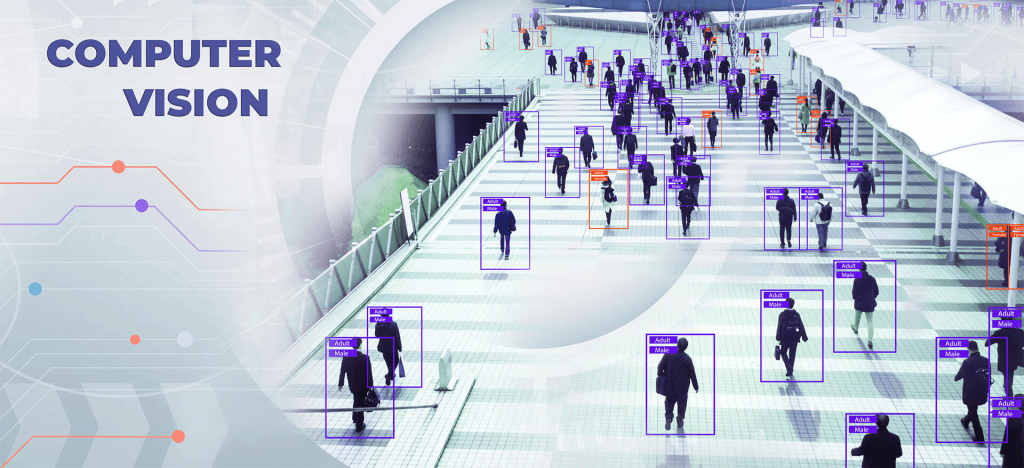
In this comprehensive guide, we’ll explore the diverse landscape of computer vision applications, delving into the key use cases, technologies, and impact across different sectors.
Understanding Computer Vision: A Primer
Before we dive into specific applications, let’s start with a brief overview of computer vision. At its core, computer vision is a field of artificial intelligence (AI) that focuses on enabling machines to interpret and understand visual information from the real world. By leveraging advanced algorithms, deep learning techniques, and image processing methods, computer vision systems can analyze and extract insights from images and videos, enabling a wide range of applications across industries.
The Spectrum of Computer Vision Applications
1. Autonomous Vehicles
Description: Autonomous vehicles, also known as self-driving cars, rely heavily on computer vision technology to perceive and interpret their surroundings. Using cameras, LiDAR, radar, and other sensors, autonomous vehicles can detect objects, pedestrians, road signs, and traffic signals, enabling them to navigate safely and autonomously on roads.
Impact: Autonomous vehicles have the potential to revolutionize transportation, making roads safer, reducing traffic congestion, and improving mobility for individuals with disabilities or limited access to transportation.
2. Healthcare Imaging
Description: In healthcare, computer vision is used for medical imaging applications such as X-rays, MRI scans, CT scans, and pathology slides. Computer vision algorithms can analyze medical images to detect abnormalities, diagnose diseases, and assist healthcare professionals in treatment planning and decision-making.
Impact: Computer vision in healthcare imaging can improve diagnostic accuracy, enable early detection of diseases, and enhance patient outcomes by providing timely and personalized care.
3. Retail Analytics
Description: Retailers use computer vision technology for various analytics and optimization tasks, including customer behavior analysis, inventory management, and cashier-less checkout systems. Computer vision systems can track customer movements, analyze shopping patterns, and optimize store layouts to enhance the overall shopping experience.
Impact: Retail analytics powered by computer vision can drive sales growth, improve operational efficiency, and enable retailers to deliver personalized and seamless shopping experiences for customers.
4. Agriculture Monitoring
Description: In agriculture, computer vision is used for crop monitoring, disease detection, and yield prediction. Drones equipped with cameras and sensors capture aerial images of fields, which are then analyzed using computer vision algorithms to assess crop health, identify pest infestations, and optimize irrigation and fertilization practices.
Impact: Computer vision in agriculture monitoring can increase crop yields, reduce resource usage, and promote sustainable farming practices by enabling data-driven decision-making and precision agriculture techniques.
5. Industrial Automation
Description: In industrial settings, computer vision is used for quality control, defect detection, and process optimization. Computer vision systems can inspect manufactured products for defects, monitor production lines for anomalies, and analyze operational data to improve efficiency and productivity.
Impact: Industrial automation powered by computer vision can enhance product quality, reduce manufacturing costs, and increase throughput by automating repetitive tasks and enabling real-time monitoring and analysis.
6. Security and Surveillance
Description: Computer vision technology plays a crucial role in security and surveillance applications, including facial recognition, object tracking, and perimeter monitoring. Surveillance cameras equipped with computer vision capabilities can detect and identify suspicious activities, unauthorized intrusions, and potential security threats.
Impact: Computer vision in security and surveillance can improve public safety, enhance situational awareness, and deter criminal activities by providing real-time monitoring and proactive threat detection capabilities.
7. Augmented Reality (AR) and Virtual Reality (VR)
Description: Computer vision is integral to the development of augmented reality (AR) and virtual reality (VR) applications, which overlay digital information onto the physical world or create immersive virtual environments. Computer vision algorithms can track and recognize objects, surfaces, and gestures, enabling interactive and immersive AR/VR experiences.
Impact: AR and VR powered by computer vision can transform industries such as gaming, education, training, and entertainment by providing immersive and interactive experiences that blur the boundaries between the physical and digital worlds.
Emerging Trends and Innovations in Computer Vision
1. Deep Learning and Neural Networks
Description: Deep learning, particularly convolutional neural networks (CNNs), has revolutionized computer vision by enabling the development of highly accurate and scalable models for image recognition, object detection, and semantic segmentation.
Impact: Deep learning-powered computer vision algorithms have achieved state-of-the-art performance across various tasks, leading to breakthroughs in areas such as autonomous driving, medical imaging, and facial recognition.
2. Edge Computing and IoT Integration
Description: Edge computing and the Internet of Things (IoT) are driving the deployment of computer vision solutions at the network edge, closer to where data is generated. This enables real-time processing, low-latency inference, and reduced bandwidth requirements for applications such as smart cameras, smart agriculture, and industrial automation.
Impact: Edge computing and IoT integration enhance the scalability, responsiveness, and efficiency of computer vision systems, enabling new use cases and applications in diverse industries.
3. Explainable AI and Ethical Considerations
Description: With the increasing adoption of AI and machine learning in computer vision, there is growing interest in explainable AI (XAI) and ethical considerations related to transparency, fairness, and accountability. Researchers and practitioners are developing techniques to interpret and explain the decisions made by computer vision models and address biases and ethical concerns in AI systems.
Impact: Explainable AI and ethical considerations are essential for building trust, ensuring transparency, and addressing societal concerns surrounding the use of computer vision technology in critical applications such as healthcare, criminal justice, and surveillance.
Conclusion
In conclusion, computer vision applications are reshaping industries, driving innovation, and transforming the way we interact with the world around us. From autonomous vehicles and healthcare imaging to retail analytics and industrial automation, computer vision technology is enabling a wide range of applications that improve efficiency, enhance safety, and deliver personalized experiences. As advancements in deep learning, edge computing, and AI ethics continue to accelerate, we can expect to see even greater strides in computer vision technology, unlocking new opportunities and possibilities for businesses, consumers, and society as a whole.
 TechAI
Leave a comment