In the fast-paced world of supply chain management, where efficiency, accuracy, and agility are paramount, leveraging artificial intelligence (AI) has become essential for staying competitive and meeting customer demands. AI technologies offer a plethora of opportunities to optimize processes, enhance visibility, and drive innovation throughout the supply chain. From demand forecasting and inventory optimization to logistics management and predictive maintenance, AI holds the potential to revolutionize the way businesses operate. In this comprehensive guide, we’ll explore how to effectively leverage AI in the supply chain, examining key strategies, benefits, challenges, and implementation considerations.
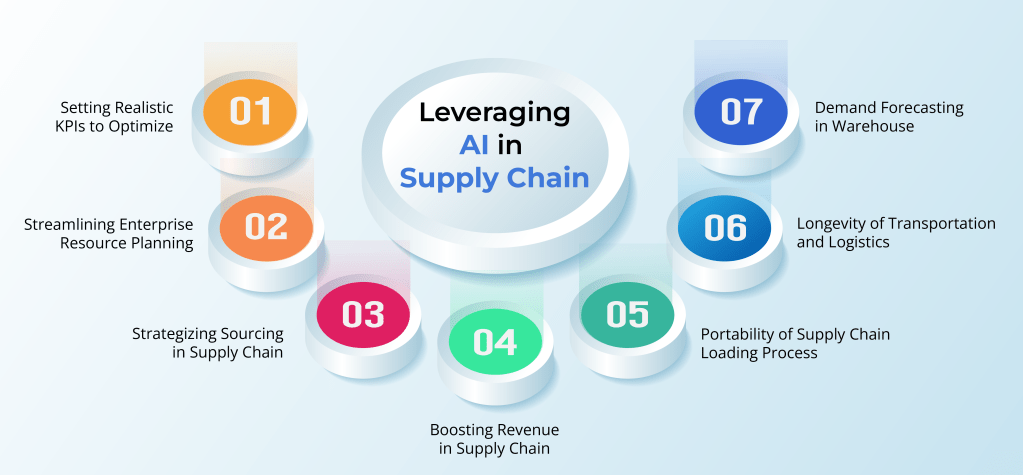
Understanding AI in the Supply Chain
Before diving into the strategies for leveraging AI in supply chain, let’s first understand what AI entails in this context:
What is Artificial Intelligence in Supply Chain?
Artificial intelligence refers to the use of advanced algorithms and technologies that enable machines to perform tasks that typically require human intelligence, such as learning from data, making decisions, and solving complex problems. In the supply chain, AI applications range from predictive analytics and machine learning to natural language processing and robotics, all aimed at optimizing various aspects of supply chain management.
Strategies to Leverage AI in Supply Chain
Now, let’s explore actionable strategies for effectively leveraging AI in the supply chain:
1. Demand Forecasting and Inventory Optimization
AI-powered demand forecasting algorithms analyze historical data, market trends, and external factors to predict future demand accurately. By leveraging AI in demand forecasting, businesses can optimize inventory levels, reduce stockouts, and improve overall inventory management efficiency.
2. Logistics Management and Route Optimization
AI-driven logistics management solutions optimize transportation routes in real-time, considering factors such as traffic conditions, weather forecasts, and delivery priorities. By leveraging AI in route optimization, businesses can minimize transportation costs, reduce delivery times, and enhance overall logistics efficiency.
3. Warehouse Automation and Robotics
AI-powered robots and automation technologies automate repetitive tasks in warehouses and distribution centers, such as picking, packing, and sorting. By leveraging AI in warehouse automation, businesses can increase throughput, reduce labor costs, and improve order fulfillment accuracy.
4. Supply Chain Visibility and Real-time Monitoring
AI-driven supply chain visibility platforms provide real-time insights into the entire supply chain, from raw material suppliers to end customers. By leveraging AI in supply chain visibility, businesses can track shipments, monitor inventory levels, and identify potential disruptions or bottlenecks, enabling proactive decision-making and risk mitigation.
5. Predictive Maintenance and Asset Management
AI-powered predictive maintenance algorithms analyze equipment data to predict potential failures and schedule maintenance activities proactively. By leveraging AI in predictive maintenance, businesses can minimize downtime, extend asset lifespans, and reduce maintenance costs.
Benefits of Leveraging AI in Supply Chain
The adoption of AI in the supply chain offers numerous benefits for businesses:
Enhanced Efficiency and Productivity
AI technologies automate manual processes, streamline operations, and optimize resource allocation, leading to increased efficiency and productivity across the entire supply chain.
Cost Reduction
By optimizing processes, minimizing waste, and improving resource utilization, AI helps businesses reduce operational costs and improve overall profitability.
Improved Decision-Making
AI-powered analytics provide businesses with actionable insights and recommendations, enabling more informed decision-making and strategic planning.
Better Customer Experience
By optimizing processes and improving service levels, AI helps businesses enhance the overall customer experience, leading to higher satisfaction and loyalty among customers.
Challenges and Considerations
Despite the numerous benefits of leveraging AI in the supply chain, businesses need to address several challenges and considerations:
Data Quality and Integration
AI algorithms require high-quality, relevant data from various sources across the supply chain. Businesses need to invest in data governance, data quality management, and data integration to ensure that their AI systems have access to accurate and reliable data for analysis.
Ethical and Regulatory Compliance
The use of AI in the supply chain raises ethical and regulatory concerns related to privacy, bias, and transparency. Businesses need to develop ethical guidelines, compliance frameworks, and governance mechanisms to ensure that their AI systems operate ethically and transparently, in compliance with relevant regulations and standards.
Skills Gap and Talent Shortage
Implementing AI in the supply chain requires specialized skills and expertise in data science, machine learning, and software engineering. Businesses may face challenges in finding and retaining talent with the necessary skillsets to develop and deploy AI-powered solutions in the supply chain.
Implementation Considerations
When implementing AI in the supply chain, businesses should consider the following key factors:
Start with Pilot Projects
Begin by identifying specific areas of the supply chain where AI can deliver the most significant value, and start with small-scale pilot projects to test the feasibility and effectiveness of AI-powered solutions.
Invest in Data Infrastructure
Ensure that your organization has robust data infrastructure and analytics capabilities to support AI initiatives effectively. Invest in data collection, storage, processing, and analysis tools to leverage AI insights and recommendations.
Collaborate with Partners
Collaborate with supply chain partners, including suppliers, distributors, and logistics providers, to share data and insights and co-develop AI-powered solutions that benefit the entire supply chain ecosystem.
Continuously Monitor and Improve
Continuously monitor the performance of AI-powered solutions and iterate based on feedback and results. Invest in ongoing training, optimization, and improvement efforts to maximize the value of AI in the supply chain over time.
Conclusion
Leveraging artificial intelligence in the supply chain holds immense potential to drive efficiency, innovation, and competitiveness. By adopting AI-powered solutions for demand forecasting, inventory optimization, logistics management, and predictive maintenance, businesses can optimize processes, enhance visibility, and improve decision-making across the entire supply chain. However, successful implementation of AI in the supply chain requires careful planning, investment, and consideration of challenges such as data quality, ethical concerns, and talent shortage. By following actionable strategies and implementation considerations, businesses can unlock the full potential of AI to transform their supply chain operations and create sustainable value for customers, partners, and stakeholders alike.
 TechAI
Leave a comment