Introduction
The fusion of generative artificial intelligence (AI) with credit scoring workflows marks a revolutionary paradigm shift in the financial landscape. Generative AI platforms, equipped with advanced machine learning algorithms, offer unparalleled capabilities to assess and enhance the creditworthiness of borrowers.
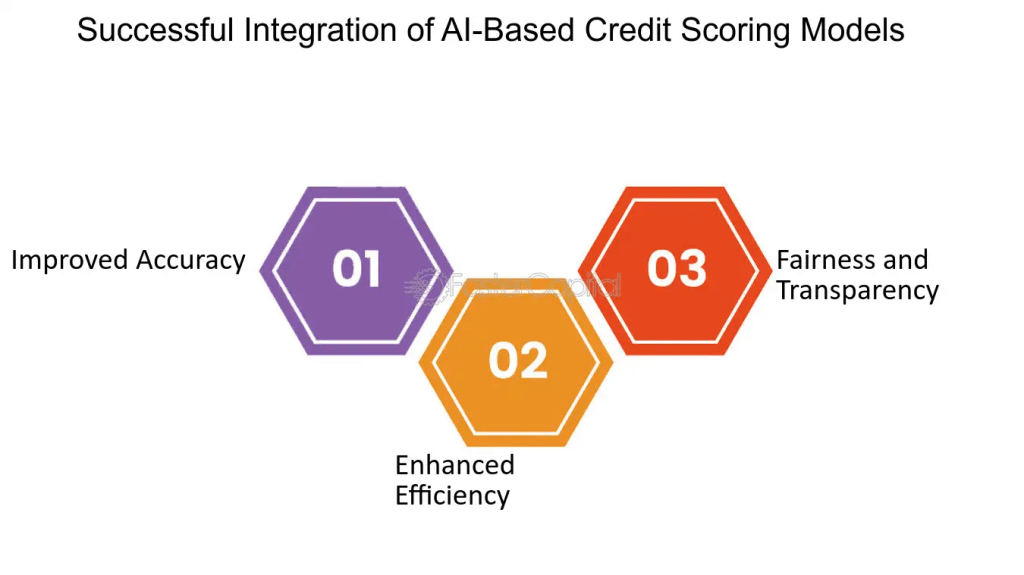
In this comprehensive exploration, we delve into the mechanisms through which generative AI platforms elevate credit scoring workflows, focusing on how AI technology can be used to determine a borrowers credit worthiness.
Understanding Generative AI in Credit Scoring
1.1 The Essence of Generative AI
Generative AI is a subset of artificial intelligence that involves the creation of new, often highly realistic, data based on existing patterns. Unlike traditional AI models that focus on predictive analytics, generative AI platforms excel in creating new, contextually relevant information.
1.2 Application in Credit Scoring
Generative AI’s application in credit scoring extends beyond traditional risk assessment. By leveraging sophisticated algorithms, generative AI platforms can process vast amounts of data, identify complex patterns, and generate insights that enhance the precision and depth of creditworthiness evaluations.
The Mechanics of Generative AI in Credit Scoring Workflows
2.1 Data Synthesis and Augmentation
2.1.1 Creating Synthetic Data
Generative AI platforms excel in creating synthetic data that closely mimics real-world scenarios. In credit scoring, this capability is invaluable for augmenting datasets, especially when dealing with limited historical credit information for certain individuals or demographics.
2.1.2 Overcoming Data Imbalance
Traditional credit scoring models may encounter challenges when faced with imbalanced datasets. Generative AI mitigates this by creating synthetic data points, ensuring a more balanced representation of diverse credit profiles.
2.2 Enhanced Feature Engineering
2.2.1 Uncovering Complex Relationships
Generative AI platforms delve deep into data, uncovering intricate relationships and dependencies that may go unnoticed by conventional models. This advanced feature engineering contributes to a more nuanced understanding of a borrower’s financial behavior.
2.2.2 Extracting Non-Traditional Indicators
Beyond traditional credit metrics, generative AI can identify and incorporate non-traditional indicators from various data sources. This may include social media activity, online behavior, and other unconventional signals that enrich the credit scoring process.
2.3 Explainability and Interpretability
2.3.1 Generating Interpretable Insights
Generative AI is not just about complex algorithms; it also focuses on generating interpretable insights. This addresses a critical aspect of credit scoring by providing clear explanations for the factors influencing a borrower’s creditworthiness.
2.3.2 Building Trust in AI Models
Explainability is essential for building trust among lenders, borrowers, and regulatory authorities. Generative AI platforms contribute to transparency by offering clear insights into the decision-making processes of credit scoring models.
AI Technology and Creditworthiness Assessment
3.1 Machine Learning Algorithms
3.1.1 Advanced Predictive Analytics
Generative AI harnesses machine learning algorithms for advanced predictive analytics. These algorithms learn from historical credit data, identify patterns, and predict future credit behavior with a level of accuracy that surpasses traditional models.
3.1.2 Real-time Decision-Making
The real-time processing capabilities of machine learning algorithms in generative AI contribute to faster credit decision-making. Lenders can respond promptly to credit inquiries, streamlining the lending process for improved borrower experiences.
3.2 Predictive Power of AI
3.2.1 Proactive Risk Identification
Generative AI platforms are designed to be proactive in risk identification. By analyzing patterns in historical data, AI models can identify potential risks before they escalate, contributing to more effective risk management.
3.2.2 Personalized Credit Risk Assessment
AI technology in credit scoring allows for personalized credit risk assessments. The ability to tailor risk evaluations to individual borrower profiles ensures a more accurate representation of creditworthiness.
Benefits of Generative AI in Credit Scoring
4.1 Precision and Accuracy
4.1.1 Granular Creditworthiness Assessment
Generative AI excels in conducting granular creditworthiness assessments by considering a broader set of factors. This precision enables lenders to make more accurate predictions about a borrower’s likelihood of repaying a loan.
4.1.2 Overcoming Data Limitations
For individuals with limited credit histories, generative AI platforms play a pivotal role in overcoming data limitations. By generating synthetic data and uncovering non-traditional indicators, these platforms provide a more comprehensive evaluation.
4.2 Enhanced Inclusivity
4.2.1 Assessing Unbanked and Underbanked Populations
Generative AI’s ability to generate insights from alternative data is instrumental in assessing the creditworthiness of unbanked and underbanked populations. This fosters financial inclusion by offering credit opportunities to those traditionally overlooked.
4.2.2 Tailoring to Diverse Demographics
Traditional credit scoring models may exhibit bias towards certain demographics. Generative AI, through its ability to create diverse synthetic data, contributes to fair and unbiased credit assessments, ensuring inclusivity across diverse borrower profiles.
4.3 Streamlined Decision-Making
4.3.1 Automation of Workflows
Generative AI platforms automate various stages of credit scoring workflows, from data synthesis to risk assessment. This automation streamlines decision-making processes, reducing manual efforts and expediting lending decisions.
4.3.2 Efficient Loan Origination
The efficiency gained through generative AI contributes to faster loan origination processes. Lenders can assess creditworthiness swiftly, providing borrowers with quicker access to funds for their financial needs.
4.4 Adaptive Learning
4.4.1 Continuous Model Improvement
Generative AI platforms embrace adaptive learning, continuously improving models with each iteration. This adaptability ensures that credit scoring models remain relevant and effective in dynamic economic environments.
4.4.2 Evolving with Borrower Behavior
As borrower behavior evolves, so do generative AI models. The ability to adapt to changing financial landscapes ensures that credit scoring remains aligned with the diverse and dynamic nature of borrower activities.
Challenges and Considerations in Implementing Generative AI in Credit Scoring
5.1 Interpretability and Explainability
5.1.1 Addressing the “Black Box” Perception
One of the challenges associated with generative AI in credit scoring is the perceived lack of interpretability. Efforts must be made to demystify the decision-making processes and enhance the understanding of how generative AI arrives at specific creditworthiness assessments.
5.1.2 Building Trust in AI Models
To gain widespread acceptance, it is crucial to build trust in generative AI models. This involves transparently communicating how these models operate, the factors they consider, and the safeguards in place to ensure fair and ethical credit assessments.
5.2 Data Privacy and Security
5.2.1 Handling Sensitive Information
Generative AI platforms, dealing with vast amounts of personal and financial data, must adhere to stringent data privacy regulations. Ensuring the security of this sensitive information is paramount to building trust in the use of AI in credit scoring.
5.2.2 Mitigating Risks of Data Breaches
The integration of generative AI introduces new considerations for mitigating the risks associated with data breaches. Robust cybersecurity measures are essential to safeguarding the integrity and confidentiality of credit-related information.
5.3 Regulatory Compliance
5.3.1 Adhering to Existing Regulations
Generative AI platforms in credit scoring must comply with existing financial regulations. This involves navigating the legal landscape to ensure that AI implementations meet the standards set by regulatory bodies.
5.3.2 Addressing Ethical Concerns
The ethical use of AI in credit scoring is a critical consideration. This includes addressing concerns related to bias, discrimination, and the fair treatment of borrowers, particularly in cases where AI models may encounter limited or biased data.
Future Perspectives: Advancements in Generative AI for Credit Scoring
6.1 Federated Learning for Privacy-Preserving Models
6.1.1 Collaborative Model Training
Federated learning, a decentralized approach to model training, may play a significant role in preserving borrower privacy. This technique allows models to be trained across multiple devices without sharing raw data, ensuring privacy while improving model accuracy.
6.1.2 Empowering Borrowers with Data Control
Federated learning empowers borrowers by giving them more control over their data. Through this approach, individuals can contribute to model training without compromising the privacy of their personal information.
6.2 Ethical AI and Bias Mitigation
6.2.1 Fair and Inclusive Credit Scoring
Advancements in ethical AI aim to mitigate biases in credit scoring models. By developing algorithms that prioritize fairness and inclusivity, the future of generative AI in credit scoring holds the promise of more equitable financial assessments.
6.2.2 Continuous Monitoring for Ethical Use
Implementing continuous monitoring mechanisms ensures that generative AI models adhere to ethical standards. This involves regular audits and assessments to identify and rectify any biases that may emerge during model operation.
6.3 Integration of Explainable AI (XAI)
6.3.1 Transparency in Decision-Making
The integration of Explainable AI (XAI) is expected to gain prominence in the context of generative AI for credit scoring. XAI techniques provide transparency into the decision-making processes, offering insights into how the models arrive at specific creditworthiness assessments.
6.3.2 Fostering Trust through Transparency
Explainability fosters trust by demystifying the operations of generative AI platforms. As credit scoring models become more transparent, borrowers, lenders, and regulatory authorities gain a clearer understanding of the mechanisms driving credit assessments.
Conclusion: Shaping the Future of Credit Scoring with Generative AI
In conclusion, the integration of generative AI into credit scoring workflows represents a transformative leap forward in the financial industry. The nuanced capabilities of generative AI platforms, from data synthesis and feature engineering to advanced machine learning algorithms, contribute to a more precise, inclusive, and efficient creditworthiness assessment.
As generative AI continues to evolve, addressing challenges related to interpretability, data privacy, and regulatory compliance will be paramount. The future holds promising advancements, including federated learning for privacy-preserving models, ethical AI practices to mitigate bias, and the integration of Explainable AI for transparent decision-making.
By harnessing the power of generative AI, the financial industry is poised to redefine credit scoring, unlocking new possibilities for borrowers and lenders alike. The journey towards a future where credit assessments are not only technologically advanced but also ethical, transparent, and inclusive is unfolding, guided by the continuous innovation and adaptability of generative AI platforms.
 TechAI
Leave a comment