Introduction
In the rapidly evolving landscape of manufacturing, the integration of artificial intelligence (AI) has brought about a paradigm shift in the way production planning and scheduling are approached. AI technologies have emerged as powerful tools capable of optimizing processes, enhancing efficiency, and addressing the complexities inherent in modern manufacturing.
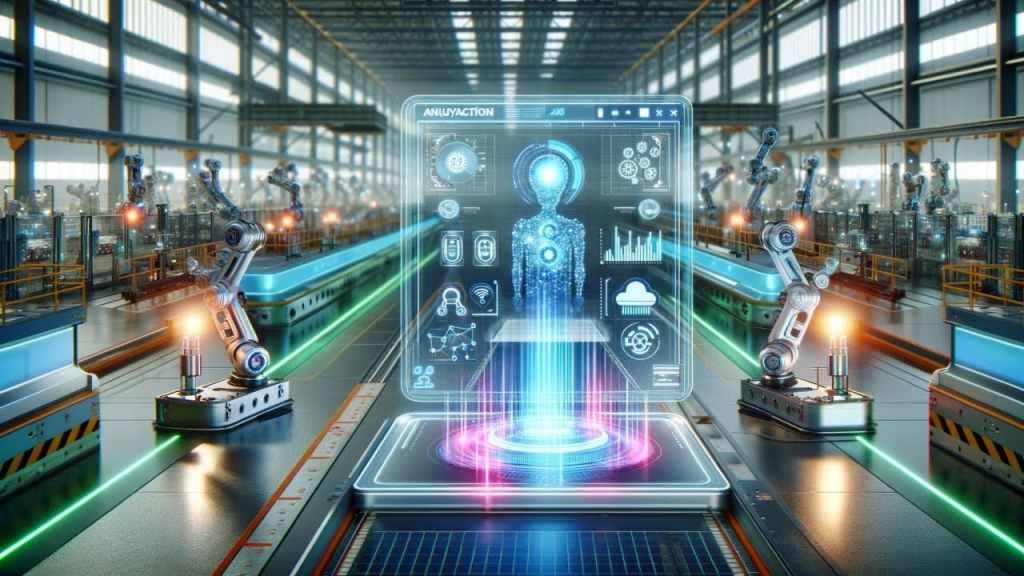
This article explores the myriad benefits of AI in production planning and scheduling, shedding light on how AI technologies are driving transformative changes in the manufacturing sector.
1. Enhanced Accuracy through Predictive Analytics
1.1 The Challenge
Accurate forecasting is a cornerstone of effective production planning, ensuring that the right amount of resources and materials are allocated to meet demand. Traditional methods often struggle with the unpredictability of market trends, demand fluctuations, and unforeseen external factors.
1.2 How AI Drives Accuracy
AI employs predictive analytics to analyze vast datasets, historical trends, and external variables. Machine learning algorithms discern patterns and make accurate predictions, enabling manufacturers to anticipate demand fluctuations and optimize production plans accordingly. This enhanced accuracy minimizes the risk of overproduction or stockouts, leading to improved resource utilization.
2. Real-Time Adaptability for Dynamic Environments
2.1 The Challenge
Manufacturing environments are increasingly dynamic, with constant changes in demand, supply chain disruptions, and unforeseen events. Traditional planning methods may struggle to adapt quickly, leading to inefficiencies and increased costs.
2.2 How AI Enables Real-Time Adaptability
AI technologies excel in real-time adaptability. Machine learning algorithms continuously analyze data from various sources, allowing for quick adjustments to production plans in response to changing conditions. This agility ensures that production remains responsive, efficient, and aligned with current demand and market dynamics.
3. Optimization Algorithms for Efficient Scheduling
3.1 The Challenge
Creating an optimal production schedule involves considering multiple variables, such as resource availability, lead times, and task dependencies. Traditional scheduling methods may fall short in optimizing these variables simultaneously, leading to suboptimal resource utilization.
3.2 How AI Optimizes Scheduling
AI-driven optimization algorithms excel in creating efficient production schedules. By considering various constraints and dependencies, these algorithms ensure that resources are allocated optimally, minimizing idle time and reducing overall production costs. The adaptability of AI allows for quick adjustments to unforeseen disruptions, ensuring a consistently optimized production schedule.
4. Predictive Maintenance for Equipment Reliability
4.1 The Challenge
Unplanned equipment downtime can be a significant challenge in manufacturing, leading to production delays and increased maintenance costs. Traditional maintenance approaches may rely on fixed schedules rather than addressing equipment issues proactively.
4.2 How AI Facilitates Predictive Maintenance
AI in production planning incorporates predictive maintenance, where machine learning algorithms analyze equipment data from sensors and Internet of Things (IoT) devices. By predicting when equipment is likely to fail, manufacturers can schedule maintenance proactively, reducing downtime, extending equipment lifespan, and minimizing maintenance costs.
5. Streamlining Sales and Operations Planning (S&OP)
5.1 The Challenge
Aligning sales forecasts with production plans is a complex task, requiring seamless communication between sales and production teams. Misalignment can lead to overproduction or stockouts, impacting overall efficiency.
5.2 How AI Enhances S&OP
AI fosters collaboration between sales and production teams by providing real-time data insights. Predictive analytics help align sales forecasts with production capabilities, enabling more informed decision-making. The integration of AI in S&OP ensures a synchronized approach, reducing the risk of overproduction or stockouts and improving overall production efficiency.
6. Supply Chain Optimization with Material Requirement Planning (MRP)
6.1 The Challenge
Managing complex supply chains and optimizing material requirements can be challenging, especially when dealing with lead time variations, supplier issues, and fluctuating market conditions.
6.2 How AI Optimizes MRP
AI enhances Material Requirement Planning (MRP) by predicting material needs with greater accuracy. Machine learning algorithms analyze historical data, supplier performance, and market trends to optimize inventory levels. AI’s real-time capabilities enable dynamic adjustments to MRP, ensuring that the production line is adequately supplied while minimizing carrying costs and reducing the risk of stockouts.
7. Improved Capacity Planning
7.1 The Challenge
Determining optimal production capacity while avoiding overburdening resources is a complex task. Traditional capacity planning methods may struggle to consider various constraints, leading to either underutilization or overloading of resources.
7.2 How AI Enhances Capacity Planning
AI-driven capacity planning utilizes advanced algorithms to optimize resource allocation. By considering historical performance data, current production schedules, and real-time resource availability, AI ensures that production capacity is efficiently utilized. This leads to a more balanced and optimized production process, reducing the risk of bottlenecks and enhancing overall efficiency.
8. Dynamic Routing for Efficient Material Flow
8.1 The Challenge
Efficient material flow through the production process is crucial for minimizing lead times and ensuring timely delivery. Traditional routing methods may not adapt well to dynamic changes in production conditions, leading to suboptimal paths.
8.2 How AI Optimizes Routing
AI optimizes routing by utilizing algorithms that dynamically adapt to changes in production conditions. Machine learning algorithms analyze historical routing data, real-time production data, and external factors to identify the most efficient routes. This adaptability ensures that routing decisions are optimized for current conditions, reducing lead times and improving overall production efficiency.
Conclusion
In conclusion, the benefits of AI in production planning and scheduling are transformative, reshaping the manufacturing landscape. The accuracy achieved through predictive analytics, real-time adaptability, optimization algorithms, predictive maintenance, streamlined S&OP, enhanced MRP, improved capacity planning, and dynamic routing collectively contribute to a more agile, efficient, and responsive manufacturing ecosystem.
As AI technologies continue to evolve, their impact on production planning becomes increasingly profound. Manufacturers embracing AI in production planning are not just reaping immediate benefits but are positioning themselves for sustained success in an ever-changing global market. The fusion of AI and production planning is an exciting journey toward a future where efficiency, adaptability, and optimization are not just aspirations but integral components of the manufacturing ethos.
 TechAI
Leave a comment