Risk management is an integral component of decision-making across industries, requiring organizations to identify, assess, and mitigate potential threats. In recent years, the advent of Generative Artificial Intelligence (AI) has introduced innovative solutions that go beyond traditional risk management approaches.
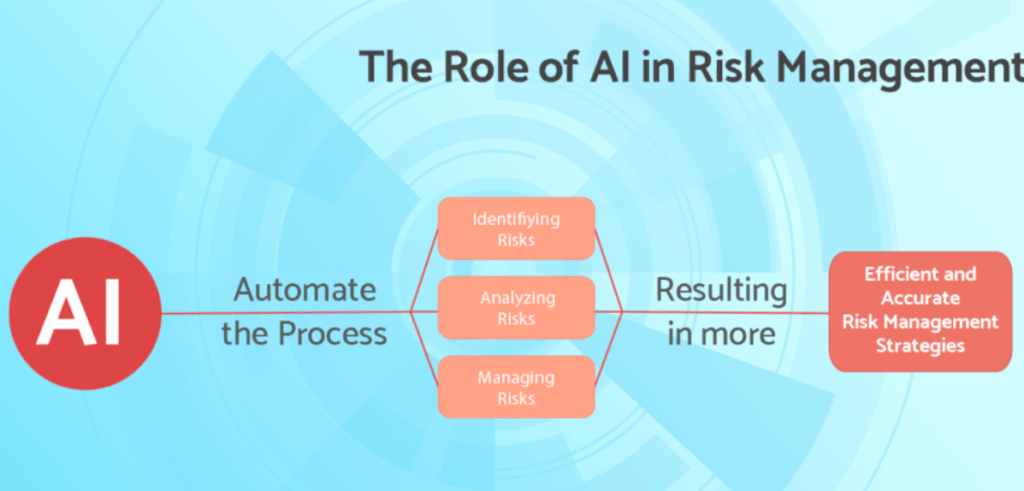
This article explores how Artificial Intelligence in risk management, offer advanced capabilities and insights for more informed decision-making.
I. Introduction
Generative AI represents a subset of artificial intelligence that focuses on creating new, original content rather than relying solely on historical data for analysis. In the context of risk management, Generative AI platforms leverage advanced algorithms to generate synthetic data, simulate scenarios, and enhance decision-making processes. This article delves into the various ways in which Generative AI optimizes risk management across different industries.
II. Creating Synthetic Data for Enhanced Analysis
A. Overcoming Data Limitations
One significant challenge in risk management is the availability and quality of data. Generative AI addresses this by creating synthetic data that mimics the characteristics of real-world data. This is particularly valuable in situations where historical data is limited or inadequate. By generating additional data points, organizations can enhance their risk analysis and make more accurate predictions.
B. Simulating Diverse Scenarios
Generative AI platforms excel at simulating diverse scenarios, allowing organizations to assess a wide range of potential risks. These platforms can generate synthetic data reflecting various market conditions, economic factors, and external influences. By simulating different scenarios, organizations can gain a more comprehensive understanding of potential risks and develop robust risk management strategies.
III. Advanced Predictive Analytics
A. Enhancing Accuracy in Risk Prediction
Generative AI significantly improves the accuracy of predictive analytics in risk management. Traditional models often rely on historical data and predefined patterns, limiting their ability to adapt to evolving risks. Generative AI algorithms, on the other hand, can identify complex patterns and trends, making them more effective in predicting emerging risks that may not be evident in historical data alone.
B. Real-time Risk Monitoring
Generative AI platforms enable real-time risk monitoring by continuously analyzing data streams and identifying patterns indicative of potential risks. This proactive approach allows organizations to respond swiftly to emerging threats, reducing the likelihood of negative impacts. Real-time monitoring is particularly crucial in dynamic industries where risks can evolve rapidly.
IV. Personalizing Risk Management Strategies
A. Tailoring Approaches to Individual Needs
Generative AI facilitates personalized risk management strategies by considering individual characteristics and circumstances. These platforms can analyze vast datasets related to customer behavior, financial history, and other relevant factors to tailor risk management approaches. This personalized approach enhances the effectiveness of risk mitigation strategies and improves overall customer satisfaction.
B. Customizing Solutions for Industry-specific Risks
Different industries face unique sets of risks, and Generative AI platforms can customize solutions to address industry-specific challenges. Whether it’s financial risks in banking, supply chain disruptions in manufacturing, or cybersecurity threats in technology, Generative AI tailors risk management strategies to the specific needs and nuances of each industry.
V. Explainable AI for Transparency
A. Building Trust through Transparency
One criticism often associated with advanced AI models is their lack of interpretability. Generative AI platforms address this concern by incorporating Explainable AI (XAI) features. This means that the platform provides clear explanations for its decision-making processes, making it easier for users and stakeholders to understand and trust the outcomes. Building trust is crucial for the widespread adoption of AI in risk management.
B. Facilitating Collaboration among Experts
Explainable AI enhances collaboration among risk management experts. The transparency provided by Generative AI platforms allows domain experts to collaborate more effectively, combining their expertise with the insights generated by the AI system. This collaborative approach results in more holistic risk management strategies that consider both quantitative data and qualitative insights.
VI. Case Studies: Industry-specific Applications
A. Banking and Finance
In the banking and finance sector, Generative AI is applied to optimize risk management in various ways. For instance, synthetic data generation helps overcome limitations in historical data, allowing for more accurate risk assessments. Advanced predictive analytics enable real-time monitoring of market conditions, supporting faster and more informed decision-making in response to changing economic landscapes.
B. Manufacturing
In manufacturing, Generative AI platforms play a key role in supply chain risk management. By simulating different scenarios, organizations can identify potential disruptions in the supply chain and develop contingency plans. The ability to generate synthetic data also aids in quality control, as it allows for the creation of diverse datasets for testing and validating product quality.
C. Healthcare
Generative AI is revolutionizing risk management in healthcare by facilitating personalized approaches to patient care. The platform can analyze patient data to identify individual risk factors and tailor treatment plans accordingly. In addition, synthetic data generation supports the development of predictive models for disease outbreaks, enhancing the ability to proactively manage public health risks.
D. Technology and Telecommunication
In the technology and telecommunication sector, Generative AI platforms contribute to risk management by enhancing cybersecurity measures. The platform’s ability to simulate diverse cyber threat scenarios allows organizations to identify potential vulnerabilities in their systems. Real-time risk monitoring ensures swift responses to emerging cyber threats, minimizing the risk of data breaches and network disruptions.
E. Education
In the education sector, Generative AI optimizes risk management by personalizing learning paths for students. By analyzing student performance data and generating synthetic datasets, the platform helps educators identify potential academic challenges and implement targeted interventions. This personalized approach enhances student success and minimizes the risk of disengagement.
VII. Challenges and Considerations
A. Ethical Considerations
The use of Generative AI in risk management raises ethical considerations, particularly in areas such as privacy and bias. Organizations must ensure that the generated synthetic data and the AI models themselves adhere to ethical standards. Striking a balance between leveraging Generative AI’s capabilities and addressing ethical considerations is crucial for responsible risk management practices.
B. Data Security and Privacy
Generative AI platforms often deal with sensitive data, and ensuring data security and privacy is paramount. Organizations must implement robust security measures to protect both the original and synthetic datasets. Compliance with data protection regulations is essential to build trust among stakeholders and avoid potential legal risks associated with data breaches.
C. Integration with Existing Systems
Integrating Generative AI platforms into existing risk management systems can be challenging. Compatibility issues, the need for additional training, and resistance to change are common hurdles during the implementation phase. Organizations must carefully plan and execute the integration process to maximize the benefits of Generative AI in risk management.
VIII. Future Trends and Outlook
A. Continued Advancements in Generative AI
As technology continues to evolve, Generative AI platforms will likely see continuous advancements. These platforms may become more sophisticated in generating realistic synthetic data and simulating complex scenarios, further enhancing their capabilities in risk management.
B. Integration with Other Emerging Technologies
The integration of Generative AI with other emerging technologies, such as blockchain and the Internet of Things (IoT), holds the potential to revolutionize risk management further. This integration can provide more comprehensive insights into supply chain dynamics, enhance cybersecurity measures, and optimize decision-making processes.
C. Regulatory Frameworks for Responsible AI
The evolving landscape of AI in risk management emphasizes the need for robust regulatory frameworks. Governments and regulatory bodies are expected to play a crucial role in establishing guidelines and standards for the responsible use of Generative AI in risk management. This includes addressing ethical considerations, data privacy concerns, and ensuring transparency in AI decision-making processes.
IX. Conclusion
Generative AI platforms are transforming the landscape of risk management across industries by offering innovative solutions that go beyond traditional approaches. From creating synthetic data for enhanced analysis to personalizing risk management strategies and ensuring transparency through Explainable AI, these platforms provide a myriad of benefits. While challenges and ethical considerations persist, the continuous advancements in Generative AI, coupled with responsible implementation, pave the way for a future where organizations can optimize risk management practices and make more informed, proactive decisions in an ever-evolving business environment.
 TechAI
Leave a comment